The Human Element
Lab Members
Meet the researchers driving the BMR Lab's mission to advance understanding at the intersection of biomechanics, multiphysics, and rheology.
Principal Investigator
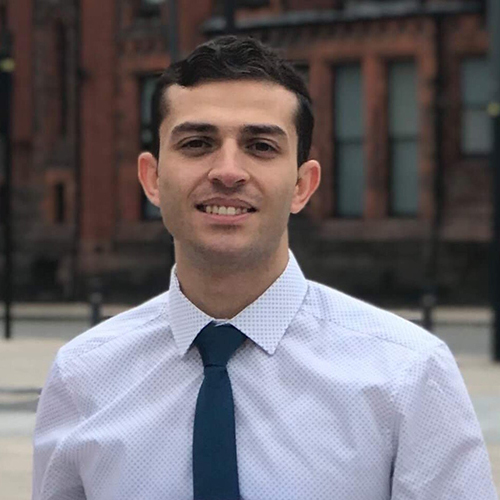
Dr Osama Maklad
BSc, PhD, CEng, MIMechE, MInstP, FHEA
Senior Lecturer in Mechanical Engineering at the University of Greenwich, School of Engineering. Member of CAMM, CASM, and C-SMART research centres.
PhD Mechanical Engineering
University of Liverpool, 2019
Chartered Engineer (CEng)
Engineering Council, MIMechE
Fellow of the HEA
Higher Education Academy
Member, Institute of Physics (MInstP)
IOP Liquids & Complex Fluids Group Committee, 2025–2029
Contact
o.maklad@greenwich.ac.ukBiography
Dr Maklad joined the Faculty of Engineering and Science at the University of Greenwich as a Senior Lecturer in Mechanical Engineering in February 2022. Previously, he worked as a Postdoctoral Research Associate at the Transient Flow Laboratory (TFL) at Liverpool John Moores University conducting research on turbulent pulsatile flows using direct numerical simulations (DNS).
He obtained his PhD in Mechanical Engineering in 2019 from the University of Liverpool within the Biomechanical Engineering Group, studying the influence of fluid-structure interaction on human eye biomechanics. After his PhD, Osama worked as a research associate at the University of Liverpool Fluids Engineering Research Group on rheological characterisation of functionalised dipeptides, yield stress and viscoelastic fluids.
Osama obtained his Bachelor of Science (BSc) with honour in Mechanical Power Engineering from Mansoura University, Egypt in 2013. He is a member of AIAA and serves as a reviewer for Soft Matter, Acta Biomaterialia, Applied Sciences, and Nanoscale journals.
Research Trajectory
2026
Journal of Microscopy — Reduced order modelling publication
2025
Co-Investigator — Bezos Centre for Sustainable Protein, Imperial College London
2025
UK Fluids Conference & Euromech Colloquium presentations
2022
Senior Lecturer in Mechanical Engineering — University of Greenwich
2020–2022
Postdoctoral Research Associate — Liverpool John Moores University (TFL)
2019–2020
Research Associate — University of Liverpool (Fluids Engineering)
2015–2019
PhD in Mechanical Engineering — University of Liverpool
2013
BSc (Hons) Mechanical Power Engineering — Mansoura University
Teaching & Module Leadership
PHD SUPERVISION
Self-Healing Composite Pipelines for Sustainable Water Infrastructure
Global water networks lose billions of litres daily due to leakage from corrosion and material degradation. This project embeds polymer-filled microcapsules in composite pipeline materials so that when a crack forms, capsules rupture and release a healing agent that seals damage and restores mechanical performance. The work integrates Finite-Element (FE) and Fluid–Structure Interaction (FSI) modelling with experimental validation to design next-generation self-healing pipelines for sustainable urban water systems.
Key Objectives
Beyond Scalp Cooling in Long-Circulating Anticancer Therapies: A Compartmentalised Nanoparticle Strategy against Alopecia
Chemotherapy-induced alopecia affects up to 60% of patients. Scalp cooling is increasingly ineffective against modern long-acting therapies. This project develops a compartmentalised lipid–polymer nanoparticle platform combining chitosan nanoparticles loaded with epinephrine (sustained vasoconstriction) and antioxidant-delivering phospholipid bilayers to extend follicular protection beyond the cooling window. A multi-inlet microfluidic platform will engineer core–shell nanoparticles with controlled architecture and release profiles optimised for follicular targeting, developed in partnership with PAXMAN.
Key Objectives
Postdoctoral Researcher (Mentoring & Co-supervision)
PDRA — Food Rheology & Texture Analysis
Natural Resources Institute (NRI), University of Greenwich · Medway Food Innovation Centre (MFIC) · Bezos Centre for Sustainable Protein (BCSP)
As part of the $30M Bezos Centre for Sustainable Protein — led by Imperial College London — Bandita leads the rheology and texture analysis work package at MFIC, working with the DHR20 Rheometer and TA.XTPlusC Texture Analyser to develop key scientific insights into the rheological and textural properties of alternative protein-based products (meat analogues and dairy alternatives). Dr Maklad provides mentoring and training in advanced rheology and data processing as part of this collaboration.
Research Students
MSc by Research
Optimisation of Fluid Flow Control Systems for Enhanced Energy Efficiency in Industrial Applications
This research focuses on optimising flow control devices — including ball, globe, and butterfly valves — in oil, gas, chemical, petrochemical, and power sectors. Using computational fluid dynamics (CFD), the project aims to identify optimal actuator settings to reduce energy losses, enhance system efficiency, and minimise environmental impact. According to the IEA, up to 15% of industrial energy (out of a 38% total industrial share) is lost through inefficient flow systems, making this research highly significant.
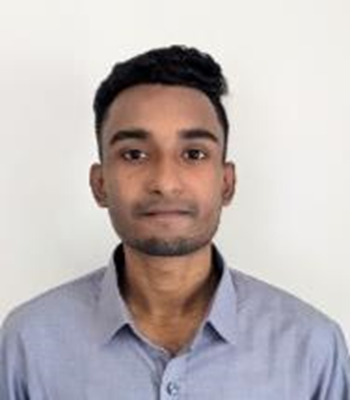
Md Maruf Ahamed
MSc Project
Aeroacoustic Analysis of Aerofoil Self-Noise: Towards Quieter Aerodynamic Designs
Flow-induced noise generated by aerofoils is a critical design constraint in numerous engineering applications. From the buzzing of drone propellers and the whoosh of wind turbine blades to the roar of aircraft wings and the hum of ventilation fans, aerofoil self-noise significantly impacts community noise pollution and public acceptance of technology. The primary sources of this noise are often categorised as: Trailing-Edge Noise, Leading-Edge Noise (or Inflow-Turbulence Noise), and Laminar Boundary Layer Instability Noise. Understanding and predicting these mechanisms is essential for designing quieter blades, rotors, and control surfaces. This project aims to delve into the fundamental physics of one or more of these noise sources.

